Google Sheets is optional
Use the manual setup path if your team already works there, but do not confuse the entry surface with the product layer.
Turn scattered operational records into a reusable, review-ready proof path.
These templates work without Vraimony. Vraimony adds packaging, verification, and structured outputs. No tracking. No lock-in. Google Sheets is optional.
Use a free template when the team already keeps operational records in a sheet. Use Vraimony when the workflow needs a cleaner output layer for review, handoff, dispute follow-up, or structured export discipline.
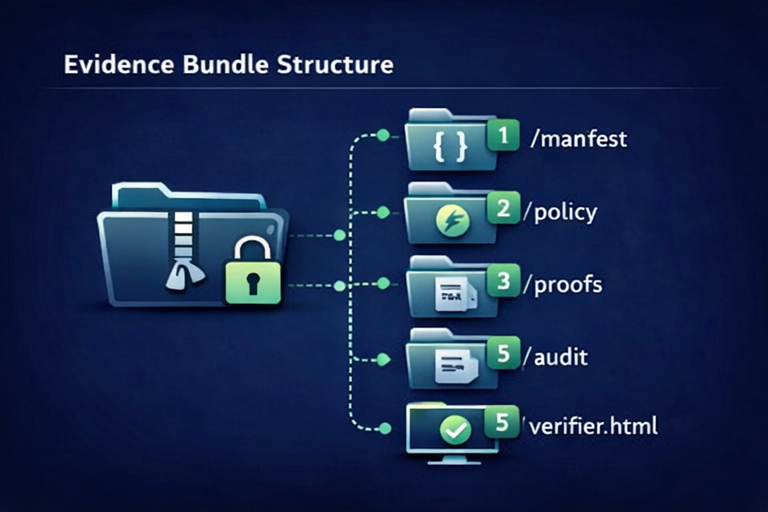
ERF turns ordinary records into portable, review-ready evidence outputs.
Use the manual setup path if your team already works there, but do not confuse the entry surface with the product layer.
CSV is the canonical portable source format. It is the escape hatch, the import path, and the tool-independent starting point.
The business value starts when records become a reusable proof path with packaging, verification, and reusable outputs.
Who it is for: merchants, suppliers, and small operations teams handling delivery checkpoints, acceptance notes, and change signals.
What it helps track: delivery events, acceptance state, change flags, supporting evidence references, and owner notes.
Connects to: One Case.
Template ID: delivery_acceptance_log_v1 · Versioned structure · CSV portable
Required: entry ID, event date, order or job ref, delivery state, acceptance state.
Optional: change flag, evidence ref, review note, owner, updated at.
Included columns: event_date · order_or_job_ref · delivery_state · acceptance_state · evidence_ref
Who it is for: creators, freelancers, and small service teams managing delivery rounds, approvals, and revision sign-off.
What it helps track: revision rounds, delivery timestamps, sign-off state, feedback summaries, and delivery asset references.
Connects to: Creator delivery lane.
Template ID: creator_revision_signoff_v1 · Versioned structure · CSV portable
Required: entry ID, project ref, deliverable name, revision round, sign-off state.
Optional: feedback summary, asset ref, approver name, approved at, note.
Included columns: project_ref · deliverable_name · revision_round · signoff_state · asset_ref
Who it is for: shipping, warehouse, procurement, and supply chain teams that need cleaner handover records before issues spread.
What it helps track: shipment references, handover timestamps, condition state, receipt state, document references, and exception notes.
Connects to: Shipping lane.
Template ID: shipment_handover_record_v1 · Versioned structure · CSV portable
Required: entry ID, shipment ref, from party, to party, handover time, received state.
Optional: document ref, condition state, exception note, operator.
Included columns: shipment_ref · from_party · to_party · handover_at · received_state
Start from a familiar working surface.
Keep the source portable and replaceable.
Prepare the workflow for a cleaner output layer.
Create a reviewer-facing overview.
Share a compact handoff object.
Keep structured export portable.
Offer read-only inspection without lock-in.
Use this as a proof-ready input path. This page does not claim a finished general CSV ingestion engine.
Problem: scattered operational records. Vraimony organizes them into consistent outputs that reduce repeated explanation, speed up review, and keep handoff state clearer.
A reviewer-facing view of what happened and where the proof path starts.
A compact handoff object for cleaner sharing and review.
A grouped output path that is easier to inspect than scattered notes and files.
Portable evidence output, powered by Vraimony ERF.
A bounded inspection path after packaging, without workflow lock-in.
Start on the sender side. Share a read-only verification path first. Keep the first receiver interaction lightweight while the workflow is still simple.
The reviewer acknowledges the package arrived and can be checked.
The package is sufficient for the immediate handoff or review step.
A small gap is identified without forcing a heavy response workflow.
The sender can add a missing record or reference and re-share cleanly.
No receiver account is required for this public phase.
Supplier evidence should be submitted in one structured package with source references, version date, and named owner before review begins.Delivery, acceptance state, and scope-change notes should be recorded per event so the review path can be packaged clearly if questions arise later.Each shipment handover should keep one event line with timestamp, from-party, to-party, receipt state, and any exception note.Each delivery round should record revision state, feedback summary, asset reference, and sign-off status before final handoff.Submission records should keep one reference path for materials, timestamp, supervisor note, and missing-item follow-up where applicable.These are workflow wording examples only. They do not create automatic legal obligations, official standard status, or acceptance guarantees.
Each launch template carries a visible template version so changes stay disciplined.
Each template has a stable ID that helps keep the record path recognizable later.
Headers stay consistent enough to support packaging later without overbuilding an import engine now.
Statuses such as accepted, pending, received, or delivered stay readable for operators and easier to normalize later.
The public story stays honest: templates are simple operational records first, then a cleaner packaging path later.
A low-friction entry layer for free operational templates in Google Sheets or CSV.
Not a spreadsheet product, not a Google add-on, not a workflow OS, and not a broad compliance platform.
Value begins when the workflow becomes a Vraimony packaging path with structured outputs and a read-only verification surface.